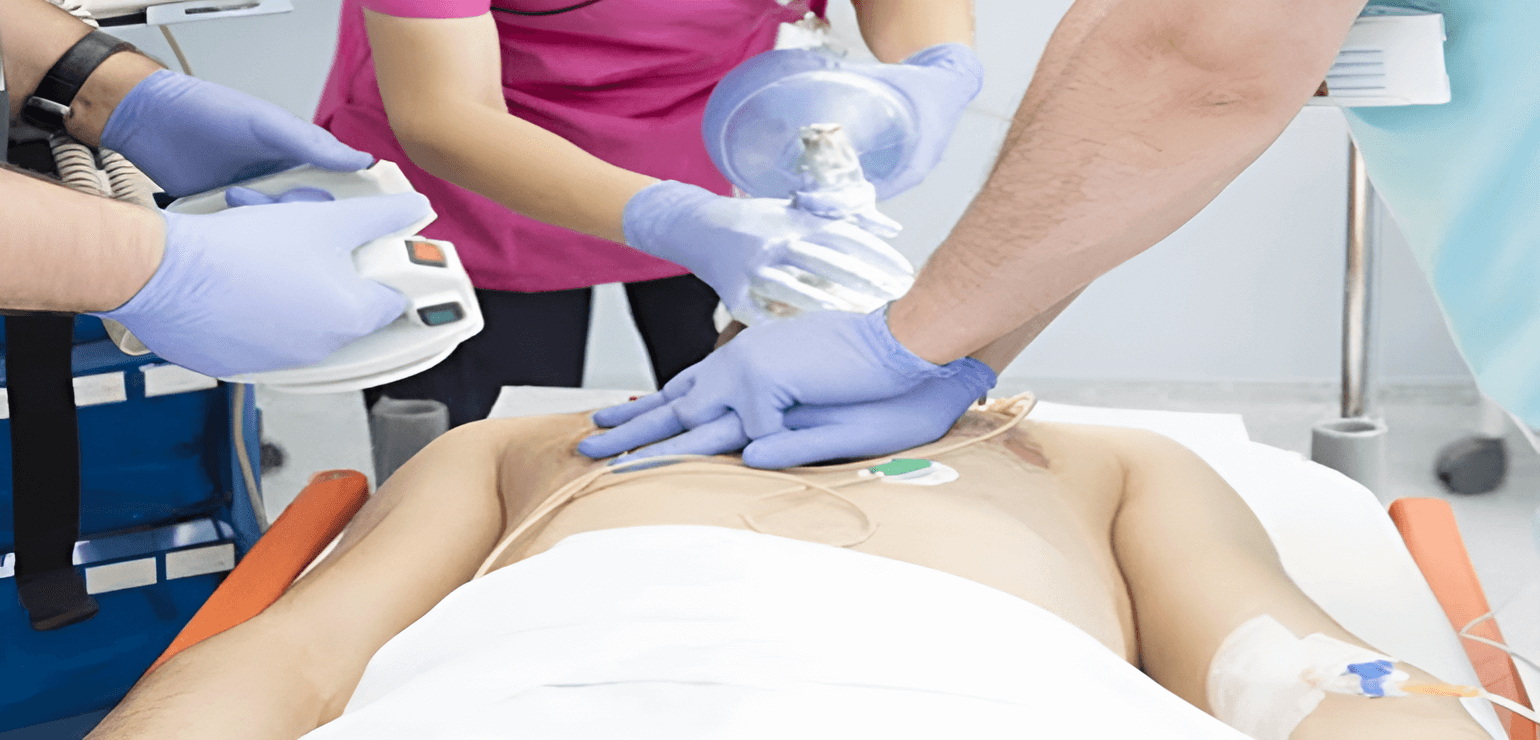
This course enables the candidate to gain experience in Emergency health services specially related to the provision of pre-hospital care and transport of the sick and injured. An Emergency Medical Service (EMS) can be defined as “a comprehensive system which provides the arrangements of personnel, facilities, and equipment for the effective, coordinated, and timely delivery of health and safety services to victims of sudden illness or injury.”
The aim of EMS focuses on providing timely care to victims of sudden and life-threatening injuries or emergencies in order to prevent needless mortality or long-term morbidity. The function of EMS can be simplified into four main components; accessing emergency care, care in the Community, care en route, and care upon arrival to receiving care at the health care facility.
Extensive practical training includes:-
Patient transport
Airway and ventilation management
Trauma assessment and treatment
Resuscitation
Life support
Monitoring
and much more.
Eligibility :
Any Medical Graduate can enroll for the Course like MBBS/ BHMS/ BAMS/ BUMS/BEMS etc.
After the successful completion of exam and formal procedures, you will get the Certificate at your registered postal address.
Mode of Education :
Regular & Correspondence
Per Year Fees :
Rs. 60,000/-
Examination :
Once in a year [ March]
Syllabus :
- Introduction of Disasters, Types & Phases of Disasters
- Definition & Classification of Disaster
- Hazards, Vulnerability, Risk Analysis
- Phases of Disaster (Preparedness, Response, Mitigation, Rehabilitation)
- Role of Community in Disaster
- Composition of Community
- Role & Responsibilities of Govt., Central & State, Corporate Sectors, NGO’s, Individual
- Environmental Laws, Rules, and Audit
- Constitutional Provisions for Environmental Protection in India
- International Environmental Laws
- Audit – Definition, Types, Benefits
- Assessment
- Emergency Methods for Carrying Casualty
- Casualty Handling
- Factors Deciding the Selection of Methods for Carrying Casualties
- Different Types of Methods
- Practical Exercise
- Rescue Operation in Different Types of Emergencies
- Search, Rescue & Evacuation
- Search, Rescue, and Evacuation in Various Types of Disasters
- Stages of Search and Rescue Operation
- Self-Rescue, Rescue by a Self-help Group
- Organize Search & Rescue Team
- Priority of Rescue
- Accident Prevention
- Accident Prevention, Reporting, Registration & Investigation
- Types – Industrial Accidents, Transportation Accidents etc.
- Causes of Accidents
- Prevention
- Reporting & Registration
- Assessment
- Fire – Home Safety, Workplace Safety
- Fire Safety
- Types of Fire
- Types of Fire Extinguishers
- Evacuation During a Fire (Smoke-Logged Room)
- Emergency Evacuation Plan
- Demonstration & Practical
- Assessment
- First Aid
- Introduction
- Handling of Medical Emergencies
- Handling of Injury Emergencies
- Practical Training
- CPR (Cardio Pulmonary Resuscitation) & Introduction of AED
- Hands-on Training
- Assessment
- Course Overview
- Overview of the Human Body
- Assessing Emergencies and Victims Pre-hospitalization
- Respiratory and Cardiac Emergencies
- Environmental and Behavioral Emergencies
- Medico-legal Issues of EMS
- EMT – Basic Pharmacology
- Drug and Alcohol-Related Crises
- Trauma Emergencies
- Functioning in the Pre-hospital Care Environment